The week's defense news ran on three tracks at once: money, people and war. The Pentagon reported it had spent almost all of the funding from the One Big Beautiful Bill, the defense secretary fired one of the department's top military planners, and a short truce took hold in a Ukrainian city. Each story traces to a single reporting origin, and each is summarized here exactly as the source states it.
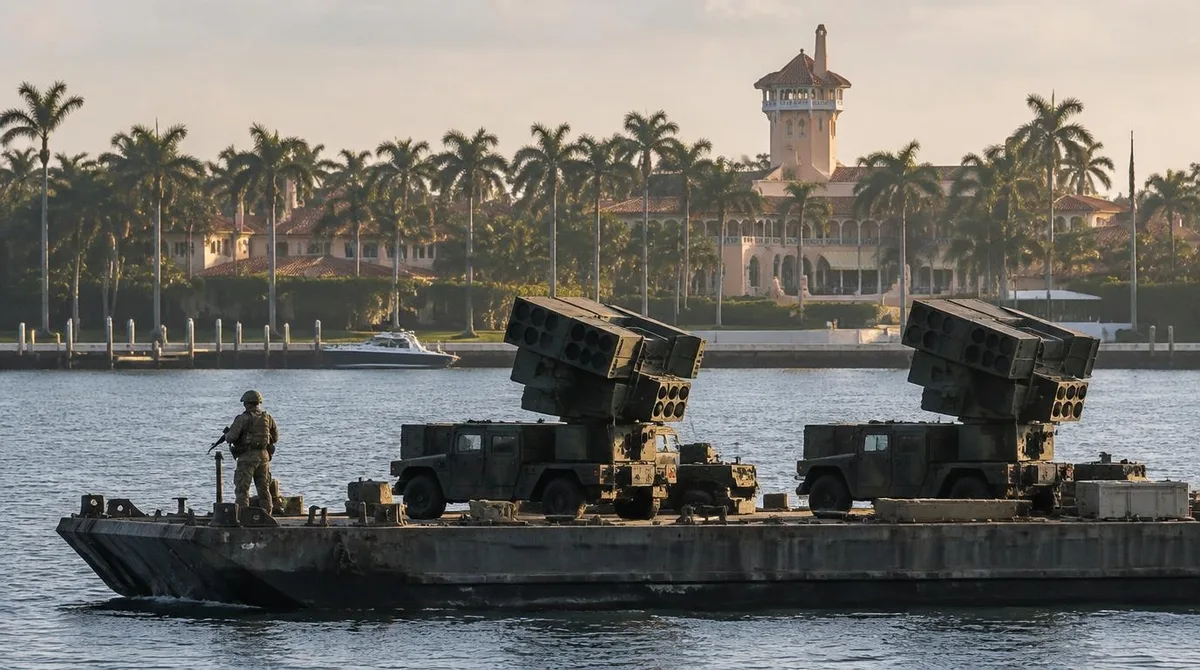
For readers tracking the wider picture, this roundup sits alongside continuing coverage such as Why Missile Defense Systems Are Stationed at Mar-a-Lago Right Now. The pattern across the week is simple. Big budget claims came with big self-praise, personnel decisions came with unanswered questions, and ceasefire progress stayed conditional. For related coverage, see Why Missile Defense Systems Are Stationed at Mar-a-Lago Right Now.
What did the Pentagon say about its spending?
The department announced it has spent almost all of the money provided under the One Big Beautiful Bill. Military.com's daily news roundup quotes a Pentagon official calling it a "record-high execution rate" and tying it to "rebuilding our military."
What the announcement does not include, in the reporting available, is a line-by-line account of where the money went. Readers evaluating the claim should hold two things side by side: the execution rate is high by the department's own description, and the purpose of each dollar is not itemized in the announcement. That gap between total spent and specific result is a normal sticking point in defense budgeting, and it is where oversight committees usually pick up the thread.
Why did the defense secretary fire a top war planner?
Defense Secretary Pete Hegseth fired Army Lt. Gen. Brett Sylvia, described by the department as its top military planner, over alleged leaks of classified information to the media. According to Military.com, the firing came Thursday, and the department accused Sylvia of misconduct for leaking classified information about U.S. roles in overseas wars.
The story carries a second edge. Military.com notes the firing renewed scrutiny of Hegseth's own handling of sensitive information, following what the outlet calls his "not-so-private military communications." In plain terms: the man enforcing security standards has faced his own questions about them. No charge, board finding or final adjudication appears in the available reporting, so the record at this point is an accusation and a dismissal, not a conclusion.
Did the Ukraine ceasefire hold?
A brief truce between Russia and Ukraine allowed an aid operation and evacuations in Oleshky, a Ukrainian city. The United States played a central role, and the White House said the mission was brokered by first lady Melania Trump, per Military.com's reporting.
The stakes were unusually high for both sides. Military.com reports that if the ceasefire holds, it would be the first significant truce the two sides have observed since Russia's invasion began more than four and a half years ago. Officials said the ceasefire was holding as Moscow and Kyiv awaited U.S.-led talks. Both governments, the outlet notes, were keen to win favor with President Donald Trump, which shaped the calculation on each side.
What happened in the Middle East and Asia?
Iran's Revolutionary Guard said Friday that a supertanker carrying more than 2 million barrels of oil struck a naval mine in the Strait of Hormuz, exploded and caught fire. The Guard said three tankers struck mines. The claim comes from Iranian state channels as summarized by Military.com, and independent confirmation is not part of the available record.
Separately, Military.com reports that Russia is believed to be helping Iran and its allies target Saudi Arabia's oil and military infrastructure, based on data and officials it cites. In Asia, North Korea fired a barrage of missiles toward the sea as tensions with South Korea rose, following leader Kim Jong Un's weekend visit to China, the North's main ally and economic lifeline.
What did allies announce on missile production?
The United States and Japan agreed to establish a Japanese facility for joint missile production. Military.com frames it as the latest move by allies who have repeatedly expressed alarm over China's growing assertiveness in Asia. On a related industrial-security note, a U.S. Air Force base in Japan banned vehicles made by the Chinese company BYD. A U.S. spokesperson said the vehicles "present an unacceptable and unmitigable risk to our personnel and our mission."
Our analysis: the two announcements belong to the same logic. One is about building weapons together; the other is about removing Chinese-made hardware from daily base operations. Both treat supply chains as a security question, not just a cost question.
What this means for service members and veterans
Most of these stories touch the community indirectly, through budgets and basing decisions. Two touch it directly. Military.com reports that the veterans group Common Defense has trained 500 poll watchers across more than 16 sessions ahead of the midterm elections, aimed at countering potential voter intimidation. Election Day is Nov. 3, and the Federal Voting Assistance Program's recommended mailing windows have passed, though steps remain for military voters who have not yet returned ballots.
Readers weighing a claim, a benefits decision or a legal question arising from any of these developments can find structured starting points in the site's coverage of veterans benefits. The official next step for any benefits or claims question is the Department of Veterans Affairs or an accredited representative, not a news summary.
The takeaway from the week's record
The week established three things and left three questions open. Established: the Pentagon says its supplemental spending is nearly exhausted, a three-star planner was fired over alleged leaks, and a first-of-its-kind truce took effect in Oleshky. Open: where the money went in detail, what the leak case resolves to, and whether the truce survives the talks that follow it. The evidence so far covers the announcements, not the outcomes.