A VA benefits attorney works one lane: representation before the Department of Veterans Affairs. The lane has a gate. VA accredits attorneys, claims agents, and Veterans Service Organization representatives. Only accredited people may prepare or pursue claims. The department keeps a public search tool that lists every accredited name. No accreditation means no representation. A website promise does not change that. The gate is old and public.
The help splits by price. VSO representatives provide claim help at no cost, always. Attorneys and claims agents may charge fees under VA rules. For a routine first claim, the free route often wins. For a denial headed to appeal, paid help can earn its keep. The choice is not permanent, either. A claimant can change representatives at any point by filing a new form.
What a VA Benefits Attorney Can Do
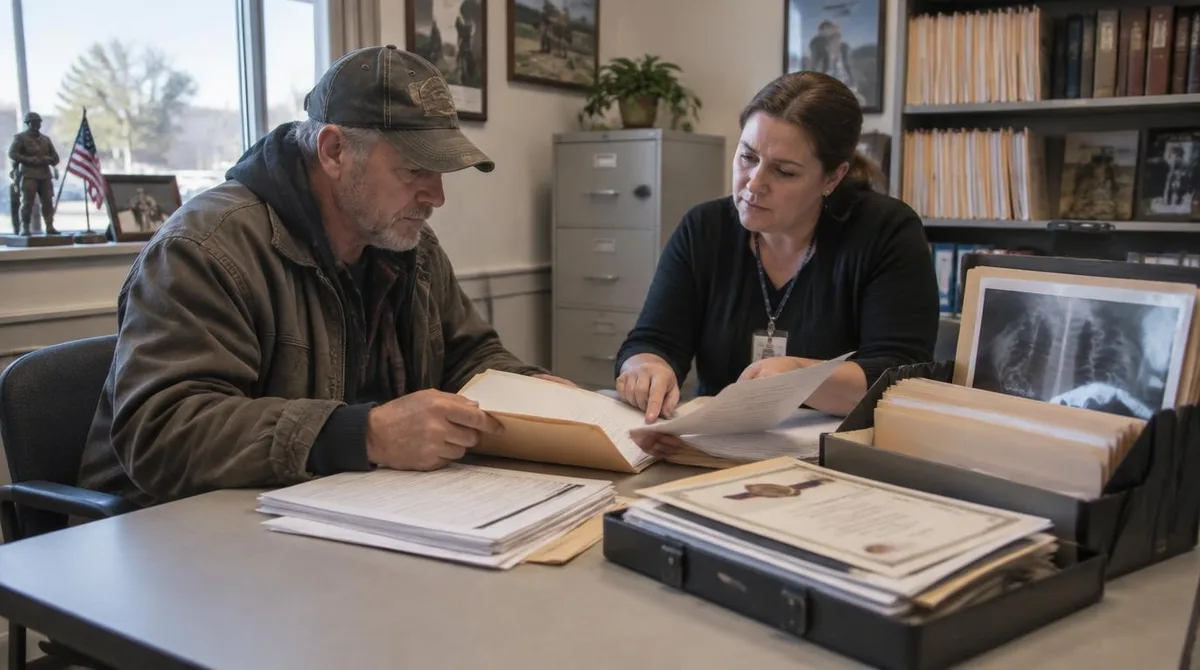
An accredited representative files claims and gathers evidence. The same person argues through decision review and appeals. Once appointed, the representative speaks for the claimant inside the VA system. The appointment runs on paper. VA Form 21-22a names an attorney or agent. VA Form 21-22 names a VSO. The form is one page of names and dates.
Both signatures belong on the form. It reaches VA online, by mail to an intake center, or in person at a regional office. A new appointment replaces any old one on file. Mail goes to an intake center. The address sits on the form, and the confirmation number proves the file date.
The scope stops at the claim. An attorney speaks to VA, not to a bank, an employer, or a court outside the system. Other work needs a different professional.
Accreditation: The Credential That Counts
VA frames accreditation narrowly. The lane is claim work. It exists for one purpose, providing representation services to claimants before VA. It does not certify financial planning skill. It may not be used to market financial products. The department itself advises caution when a claimant picks a representative.
The search tool from the VA Office of General Counsel settles the question in seconds. A name lookup shows the status and any group tie. Checking it before any signature is the best screen against impostors. The tool runs on any phone. The search shows current status, so a quick recheck before each filing season costs nothing. Status changes matter. A representative who cannot act today cannot fix a deadline tomorrow. For related coverage, see GI Bill Comparison Tool: How to Read It Before Choosing a School.
The Fee Rules, Stated Plainly
VSO help is free. Attorney and agent help may carry fees, and VA oversees the fee agreements. Complaints about fees go back to the department, which polices the accredited list. A fee agreement never touches the VA payment itself. The department pays benefits, and the representative bills the client under the agreement. We covered a connected angle in VA Benefits Calculator: What It Estimates and What It Cannot.
The structure keeps the market honest at the edges. A representative who charges for what a VSO does free owes the client a reason. A representative who cannot show accreditation owes the client the door.
When Paid Help Makes Sense
Complex cases reward paid skill. Denials with thick evidence conflicts fit the pattern. So do ratings that ignore the medical record and appeals headed to the Board. Older claims with lost records lean on attorney persistence too.
Appeals stretch for months, and the record grows as they run. An accredited representative keeps the evidence thread tight through each stage, which is where paid skill pays. The record tells the story.
Simple claims lean the other way. A first filing with clear service records and a strong medical link usually moves fine with free help. Starting free keeps the option to hire later. Talent varies inside every lane, too. A free representative with a hundred VA files of experience often beats a paid generalist.
Conclusion: Search Before Signing
The order of steps protects veterans. Search the accreditation database first. Compare paid help against free VSO service second. Sign the appointment form third, and keep a copy. The database is public, the comparison takes one call, and the signature should come only after both steps pass. The three steps take less time than one sales call, and they cost nothing. Keep the copies in one folder, because the next filing season always comes.