SNAP benefits VA families often miss are the same food help civilians use, with rules that favor veterans. Two numbers gate a one-person household in the 2026 fiscal year. Gross monthly income must stay under $1,696. Net income must stay under $1,305. VA clinics screen for food trouble at appointments. Social workers can then walk a household through the forms.
The program pays through an EBT card loaded each month for groceries. Applications run through state agencies, not VA. The state of residence picks the office, the form, and the portal. The veteran breaks below change the math for many households.
The SNAP Benefits VA Screening at Clinics
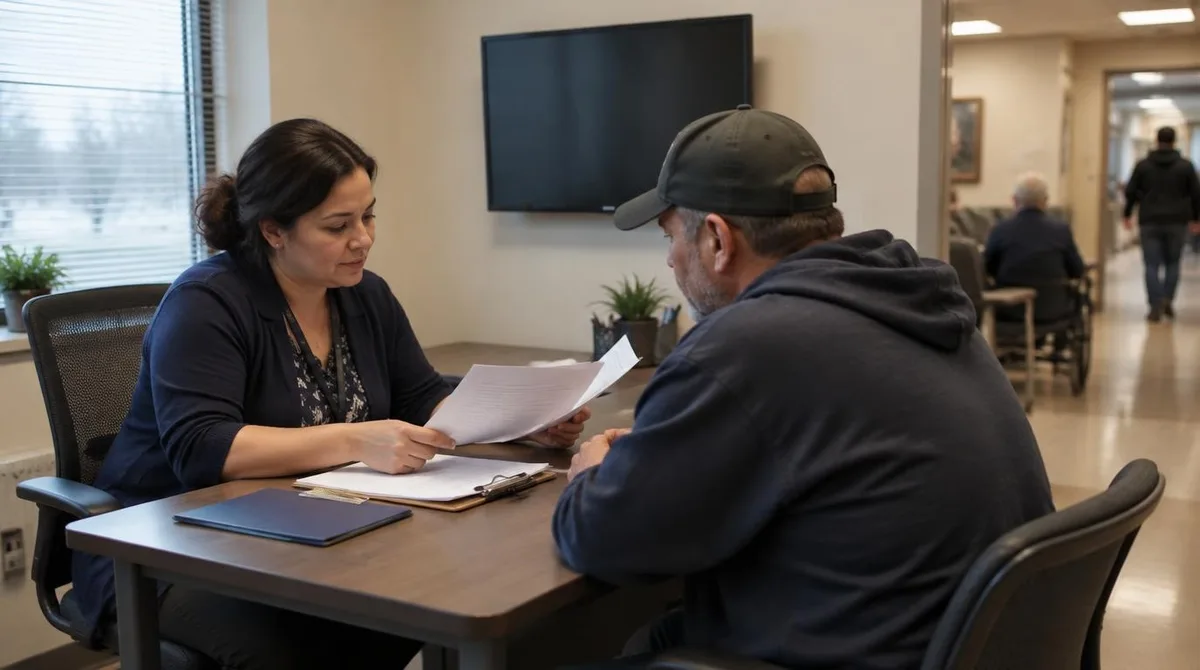
VA primary care teams ask about the food supply at home. It is a routine clinical question. An answer of sometimes true or often true triggers a referral. A VA social worker can then connect the household to SNAP help.
The VA food security office publishes a step-by-step application handout. It also links the state SNAP directory. The screening carries no penalty and no forced filing. It opens a door, and the household chooses whether to walk through. A veteran with the handout rarely needs a second appointment for the basics.
Income and Resource Limits for 2026
SNAP counts income against two lines. For one person in the 2026 fiscal year, gross monthly income must stay under $1,696. Net income must stay under $1,305 after allowed deductions. Bigger households carry higher lines tied to the poverty measure.
Resources have their own test. The standard limit sits at $3,000. It rises to $4,500 when a household member is 60 or older or disabled. Households that receive VA payments can still pass, because deductions and the resource rules offset a range of income types.
Deductions do real work in the math. The rules allow write-offs for shelter costs, dependent care, and some medical costs for older or disabled members. Each deduction pulls net income down toward the line. The lines move each October with the new fiscal year. A household that missed by a few dollars in one year may clear the line in the next.
The Veteran Exemption From Time Limits
General SNAP rules place time limits on certain adults who do not meet work-hour rules. Veterans are exempt from that limit. The rule sits in the federal eligibility text, and state caseworkers apply it once veteran status is declared.
The exemption has real weight. A veteran cannot lose the benefit over hours alone. It pays to state veteran status plainly on the first page of the application. The rule has held for years, and no state adds the limit back. We covered a connected angle in VA Benefits News: How to Separate Real Rule Changes From Rumor.
How the Application Works, State by State
Applications go to the SNAP office in the state where the household lives. Online portals serve most states, and paper forms serve the rest. Standard processing runs about 30 days. Households with almost no resources can qualify for expedited service inside 7 days.
Documents move the clock. Pay stubs, rent receipts, and ID proofs decide the file date. A complete file skips the request-for-proof loop and keeps the 30 days intact.
Benefits land on an EBT card. The amount tracks household size, income, and deductions. Veteran status shapes the time limit, not the amount, so two equal budgets bring equal benefits. Readers following this should also see Chapter 31 VA Benefits: Veteran Readiness and Employment Explained.
Conclusion: Start With the Screening Question
The fastest entry point is the SNAP benefits VA screening question at the next primary care visit. A social worker can carry the referral from there. The household can also file straight with the state agency. Either path starts the same 30-day clock, and the veteran exemption keeps the benefit steady once it begins. The card arrives by mail, and the balance loads on the same day each month after that.